How do I clean a showerhead with vinegar?
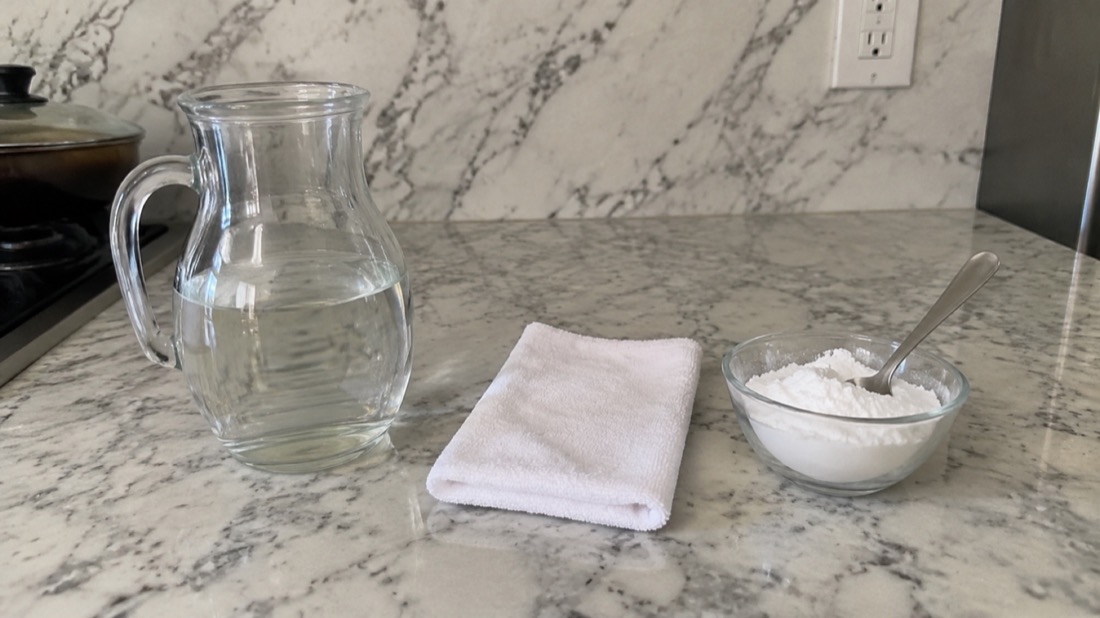
You have seen the trick. You put baking soda on something, pour vinegar over it, and it foams up dramatically. It looks like work is being done.
There is a whole genre of advice that tells you to dump both in a bowl, watch the foam, and feel like a scientist. If you have been doing it for years, you were not foolish. They are both good cleaners. Nobody told you what the foam is.
What the foam is
It is an acid and a base destroying each other. The bubbles are carbon dioxide. What is left in the bowl afterward is mostly salt water. You have taken two useful cleaners and converted them into a third thing that is weaker than either.
Cleaners work by being at a particular pH. Grease answers to alkaline. Minerals answer to acid. Baking soda is mildly alkaline, and vinegar is a mild acid. Pour them together and they neutralise each other, and what you have left is a mess with no direction.
Most of the time, when you combine two products, you are not making something stronger. You are making something weaker.
Where the fizz does help
I will be fair to it. The fizz is not useless. The bubbling is mechanical, and it does loosen debris a little.
- In grout. Scrub a baking soda paste along the lines first, then spray vinegar over it. The foam agitates the paste down into the pores. But the foam is not the cleaning. Once it stops fizzing, the vinegar is spent.
- In a slow drain. Half a cup of baking soda, then a cup of white vinegar, a plate over it for fifteen minutes, then a flush with hot tap water, never boiling. It helps with smell. It will not open a real clog. It is a freshener, not a cure.
So use it there if you like the theatre. Just do not think you have made a super-cleaner. You have made a science fair.
What to do instead
Stop asking what cleaner to use, and ask what the mess actually is.
Sticky, tacky, holding dust like glue. That is grease, and it answers to dish soap, warm water and the alkaline side. White, chalky, a crust or a cloudy film. That is mineral, and it answers to a mild acid and time.
Then use the two of them separately, one after the other.
- Soda first, for the scrub. Mix baking soda with just enough water to make a paste about the thickness of toothpaste, roughly 3 parts soda to 1 part water.
- Spread it thick and leave it. Twenty minutes for light work, overnight for a serious oven.
- Wipe it out with a damp cloth, then go over it twice with clean water, because baking soda leaves a white residue that shows on dark surfaces.
- Then vinegar, for the mineral or the shine. My all-purpose spray is 1 cup white vinegar, 1 cup water and 1 teaspoon blue dish soap, with the soap added last and swirled, not shaken. On light mineral film, give it 15 to 30 minutes and keep it wet.
In sequence they are two weapons. Mixed in a bowl they are a party trick.
When this will not work. Vinegar is not a miracle, and neither is baking soda. A truly burnt oven, a truly seized-up hard water buildup, a mold problem that has gone into the wall. For some of those, the right answer is a commercial product used correctly, or a professional.
A book that claims vinegar solves everything was written by someone who has never cleaned anything. I will not oversell you, and that is why you can trust the rest of what I tell you.

Bertha's Cleaning Book
- 639 pages, 32 mixes with the exact amounts, every room.
- Instant PDF, any device
- 7-day money back